
Learn simple styling and display secrets for retail business owners.
Running a retail business requires balancing smart inventory costs with high customer expectations. Achieving a luxurious shopping experience on a realistic budget is entirely possible through strategic presentation. Sourcing beautiful wholesale fashion jewelry forms the solid foundation of a shop, but how owners showcase these pieces directly determines their perceived value.
This guide explores exactly how to transform any retail space into a high-end boutique environment using simple visual merchandising techniques.

Why Fashion Jewelry Fits New Businesses Best
Starting a retail venture requires smart capital allocation. Budget-friendly accessories offer the safest route for building a diverse inventory quickly. Business owners avoid tying up massive amounts of cash in slow-moving fine metals. This strategy allows them to test the waters and see what the local market actually wants to buy.
Here are the main reasons this inventory type works so well for beginners:
-
Rapid Trend Agility: Retailers swap out styles rapidly as consumer tastes change season by season.
-
Impressive Profit Margins: The low cost per unit allows for substantial retail markups.
-
Frequent Repeat Purchases: Customers buy these items casually, leading to frequent return visits to the shop.
-
Massive Visual Impact: Stores can stock a visually impressive variety of wholesale fashion jewelry without breaking the bank.
How Can I Make Affordable Fashion Jewelry Look More Premium in My Store?
This is the exact question countless business owners ask as they set up their shop. Upgrading visual merchandising changes the entire customer experience. Store owners do not need a massive remodeling budget to achieve this goal. They simply need to apply high-end retail psychology to their current setup. Small adjustments in spacing, lighting, and presentation completely rewrite the customer experience.
Here are specific ways retailers upgrade their presentation instantly:
-
Apply the Power of Negative Space: Crowded shelves scream bargain bin. High-end stores display fewer items per square foot. Give pieces room to breathe.
-
Upgrade Store Lighting: Ditch standard fluorescent ceiling lights immediately. Invest in warm directional LED spot lighting.
-
Focus on Subtle Sensory Details: Play soft sophisticated background music. Keep the store smelling fresh and clean.
-
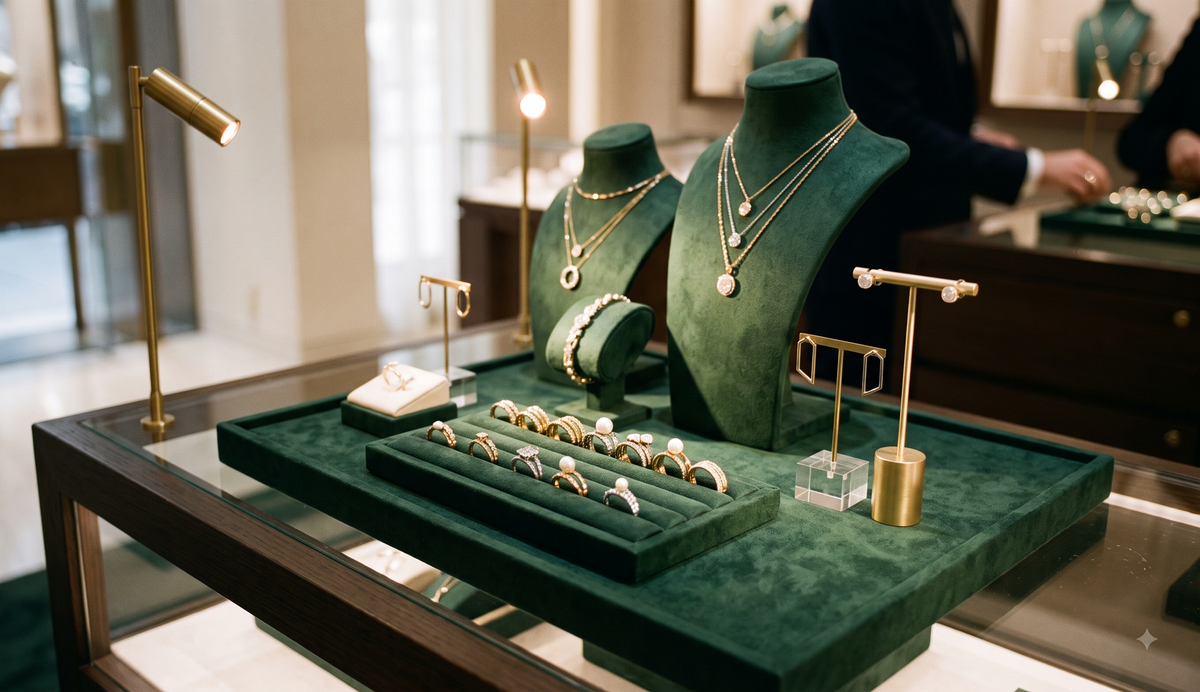
Invest in Quality Display Props: Swap cheap plastic holders for soft velvet, brushed metal, or clean acrylic stands.
-
Create Carefully Curated Collections: Group items by color story or theme rather than cramming all the jewelry pieces into one chaotic tray.
Let us explore the specific techniques that make these strategies work so well:
#1 The Science of Retail Lighting
Lighting changes absolutely everything in a retail environment. Have you ever noticed how diamonds sparkle intensely in a mall store but look dull at home? That effect is completely intentional. For budget-friendly items, retailers want to mimic that exact effect.
Store owners need lights with a high Color Rendering Index. A score over 90 ensures colors look vibrant and true to life. Retailers use directional spotlights to create sharp contrast inside their display cases. The resulting shadows make the shiny metal pop beautifully against the background. Warm lighting works best for gold tones. Cooler lighting makes silver and cubic zirconia look incredibly crisp.
#2 The Psychology of Spacing and Scarcity
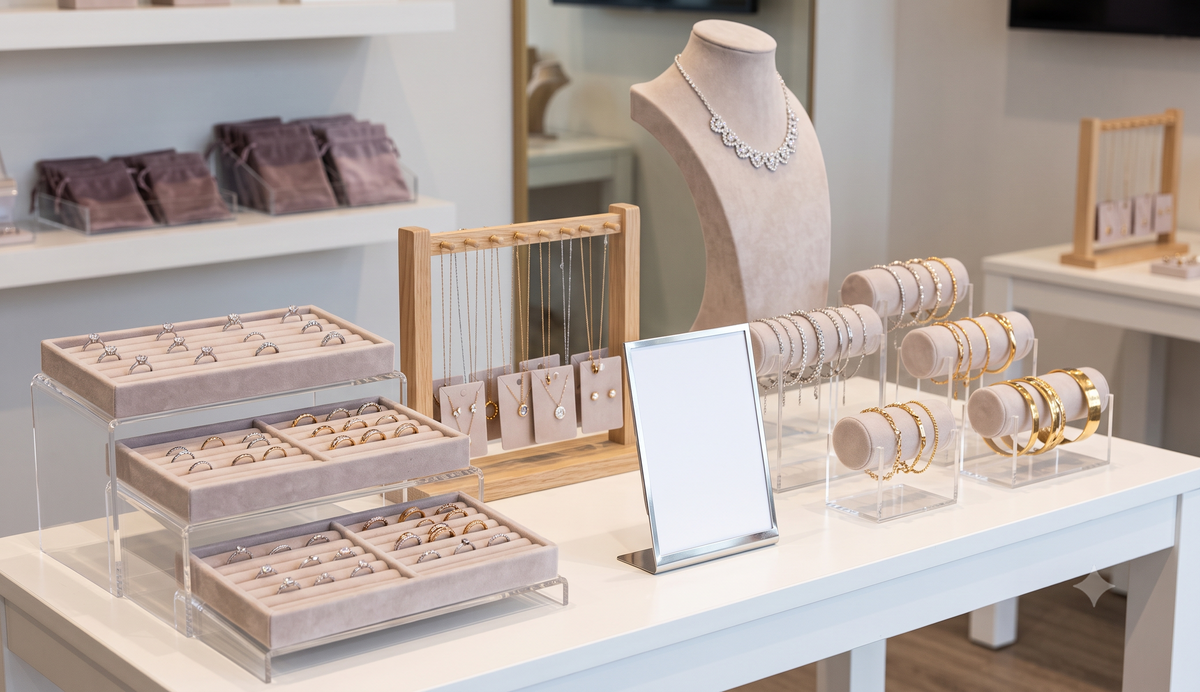
Why do luxury boutiques look so incredibly empty? Space implies rarity. Rarity implies immense value. When shop owners cram fifty bracelets onto one single rack, customers perceive them as mass-produced and cheap. Retailers should try removing half of the items from their main display cases today.
Place a single necklace on a beautiful velvet bust. Customers will naturally assume that single piece is incredibly special. They will spend more time looking at the specific details of the item. This approach reduces choice paralysis. Shoppers get overwhelmed when they see too many options. A clean, spaced-out display guides their eyes exactly where the retailer wants them to look. But if small space is a problem, you can find solutions from our other article "7 Tips for Displaying Fashion Rings in Small Spaces.”
#3 Premium Packaging Experiences
How do customers carry their purchases out of the store? A flimsy plastic bag diminishes the shopping experience instantly. High-end brands understand that the unboxing process is a core part of the product. Boutique owners buy bulk custom packaging very affordably online.
Staff should wrap items in crisp branded tissue paper. They place them in a thick paper bag with ribbon handles. Stores give customers a small branded polishing cloth with their purchase. These tiny additions cost pennies per unit but add actual dollars to the perceived value of the items. When a customer gives the item as a gift, the beautiful packaging does the marketing work for the store.
#4 Curating Compelling Color Stories
Presentation is essentially about telling a visual story to the buyer. Store owners should never organize their store purely by item type. Instead, they try creating cohesive visual themes. A shop might build a summer rose gold display near the front door. Staff pair complementary colors together on a single viewing table.
This clever tactic encourages add-on sales naturally. Customers see how pieces work together as a complete outfit. When someone buys a statement necklace, they will easily spot the matching fashion jewelry right next to it. Telling a color story makes the shopping experience feel like a curated fashion magazine spread.
#5 Professional Staff Presentation
The sales team is a crucial part of the visual display. If the staff treats the inventory like cheap trinkets, the customers will too. Owners train their teams to handle the items with immense care. Employees always use velvet pads when showing items to customers over the counter.
Taking a piece out of a case and placing it gently on a padded tray communicates respect for the product. The staff wears clean professional clothing. They know the story behind the trends they are selling. Confidence from the sales team translates directly into customer confidence in the product.
#6 Strategic Mirror Placement
Mirrors do more than just let people see how they look. They bounce light around the store and make the space feel twice as large. High-quality mirrors are absolutely essential for selling accessories as they alsoencourage impulse purchases.
Retailers place small, elegant hand mirrors on the top of their display cases. Customers love holding these up to check earrings or necklaces. Stores install full-length mirrors with flattering warm backlighting on their main walls. When a customer looks in the mirror and feels beautiful, they are significantly more likely to make a purchase. Staff must keep these mirrors flawlessly clean at all times. Smudges ruin the luxury illusion instantly.
#7 The Importance of Immaculate Cleanliness
Nothing ruins a premium vibe faster than dust. Budget-friendly accessories look stunning on their own. A layer of dust simply makes them look forgotten. Store owners implement a strict daily cleaning schedule.
Employees wipe down all glass cases with a streak-free cleaner every single morning. They dust the velvet busts with a lint roller. The staff polishes the pieces themselves so they always shine under the new spotlights. A sparkling clean store tells the customer that the business values its merchandise highly. Shoppers subconsciously adopt the same respectful attitude toward the products.
#8 Utilizing Window Displays Effectively
A window display serves as the physical store's billboard. This provides the very first chance to establish a premium feel. Retailers avoid cluttering the window with massive neon sale signs and dozens of items. They create a focused, artistic scene instead.
Visual merchandisers use interesting props like old hardcover books, dried floral arrangements, or sleek geometric blocks. These items give height and interest to the display. Stores change this window scene every two weeks to keep local foot traffic engaged. A minimalist, well-lit window display draws curious shoppers inside. They enter expecting high quality.
#9 The Invisible Influence of Scent Marketing
Retail psychology goes far beyond just visual elements. How does a premium boutique smell? High-end stores never smell like harsh cleaning chemicals or cheap air fresheners. They utilize subtle scent marketing to relax the shopper.
According to research in the hotel industry, pleasant ambient scents keep customers browsing longer. Retailers use hidden diffusers with sophisticated fragrances like white tea, sandalwood, or light citrus. These subtle scents create a calming environment. Shoppers associate these specific fragrances with luxury hotels and high-end spas.
#10 Crafting the Perfect Audio Atmosphere
Background music silently dictates the pace of the shopping experience. Loud, aggressive pop music makes shoppers feel rushed. They grab what they need and leave quickly. Premium boutiques use audio to slow the customer down.
Store owners play instrumental music, soft jazz, or acoustic covers at a very low volume. The tempo should mimic a resting heartbeat. When shoppers feel relaxed, they take their time trying on different pieces. They chat with the staff. This relaxed state directly leads to larger basket sizes and a much better customer experience.

Quick Reference Styling Guide
Here is a simple breakdown to help visualize the major differences between a standard setup and a premium boutique setup.
|
Display Element |
The Bargain Look |
The Premium Boutique Look |
|
Item Spacing |
Crowded racks and stuffed trays. |
Generous breathing room between pieces. |
|
Lighting setup |
Harsh fluorescent overhead tubes. |
Warm directional LED spotlights. |
|
Customer Packaging |
Clear plastic bags with no logo. |
Tissue paper, custom boxes, and ribbon. |
|
Staff Handling |
Handing items directly to the buyer. |
Placing items on a soft velvet viewing pad. |
|
Window Displays |
Neon sale signs and cluttered shelves. |
Minimalist artistic props with focal lighting. |
Frequently Asked Questions
You probably still have some specific questions about setting up your retail space. Here are some of the most common questions business owners ask about visual merchandising.
Q: What is the best background color for display busts and trays?
A: Neutral colors work best for creating a high-end look. Soft cream, charcoal gray, and classic black are the safest choices. Black velvet makes silver and cubic zirconia pop beautifully. Cream linen gives gold pieces a very warm and inviting appearance. Avoid loud patterns or neon colors because they distract from the actual accessories.
Q: How often should a store rotate the items in the main display cases?
A: Retailers should try to rotate their key displays every two weeks. Regular customers stop looking at the cases if they see the exact same layout every time they visit. Moving pieces to different parts of the store makes old inventory feel brand new again.
Q: Can a shop mix silver and gold tones in the same display case?
A: Yes, retailers absolutely can mix metals. Mixed metals are highly trendy right now. Just ensure the staff mixes them intentionally. Create a balanced pattern rather than a random jumble. Shops group pieces by style or theme instead of purely by metal color.
Q: What is the best way to price items that look more expensive than they actually cost?
A: Pricing is about perceived value. If a store follows the steps above to make the item look premium, the owner can safely apply a higher markup. Research what local competitors charge. Price the items just slightly below fine jewelry, but comfortably above standard mall kiosks. This hits the sweet spot for budget-conscious luxury shoppers.
Q: How do staff safely clean items before putting them out for sale?
A: Always read the manufacturer's care instructions first. For most items, a simple wipe with a soft microfiber cloth is enough to remove fingerprints. Avoid harsh chemicals that might strip away plating. Keeping those fashion jewelry pieces completely smudge-free ensures they sparkle beautifully under the display lights.
Final Thoughts
Transforming a retail store does not require a massive loan or a total renovation. It simply requires a smart shift in perspective. Business owners sell a feeling as much as they sell a physical product. By upgrading the lighting, giving pieces room to breathe, and treating the inventory with immense respect, retailers change the entire shopping experience.
Customers gladly pay higher prices when they feel they are shopping in a genuine luxury environment. Store owners can start small by reorganizing just one display case today using the negative space method. They will likely see an immediate positive reaction from their daily foot traffic. Keep refining this visual approach, and the retail business will continue to grow beautifully.