
Here's a practical guide for small retailers planning early 2026 buys.
Understanding what customers will want next year starts long before the new season rolls in. Before sourcing wholesale fashion jewelry, smart retailers study their own numbers to uncover patterns hiding in plain sight.
Sales data plays a bigger role than many realize. It can hint at buying habits, seasonal spikes, and early signs that certain styles might rise again. When you learn how to interpret these patterns, you make stronger buying decisions that support higher margins and fewer leftover pieces.
This guide breaks down how to forecast early 2026 jewelry trends by using last year’s performance as your roadmap.

Understanding Sales Data in Jewelry Businesses
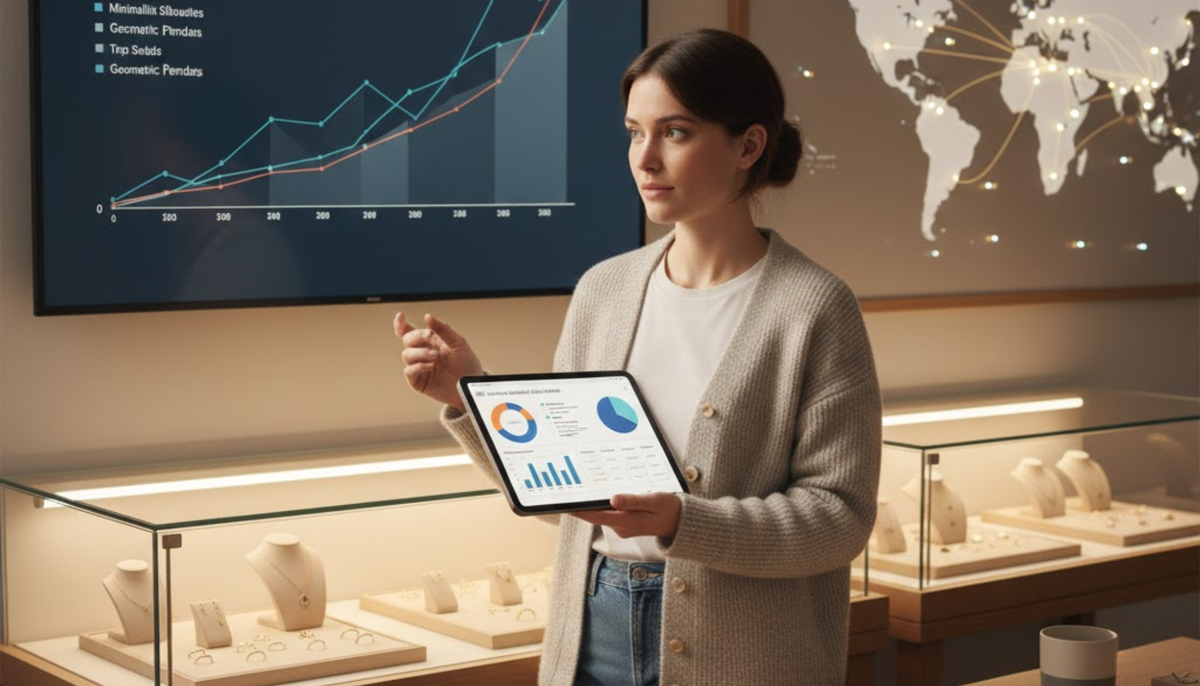
Sales data tells the story of what your customers prefer and how those preferences shift throughout the year. Instead of relying on assumptions, you get clear proof of what sold fast, what sold steadily, and which items deserve another look. Jewelry businesses gather data from POS reports, eCommerce dashboards, and seasonal inventory snapshots. When organized, these reports show how trends move.
Why does this matter? The total value of the U.S. jewelry market in 2024 was an estimated $78.4 billion. The total sales value across the market increased by 1.4% in 2024 compared to the previous year. This clearly shows steady consumer interest across the country.
As the market grows, small retailers compete by offering pieces that match the direction shoppers are heading in. That makes data analysis even more essential.
Sales data breaks into categories that help with forecasting:
-
Top sellers show your most powerful styles
-
Slow movers tell you which pieces might need rethinking
-
Growth categories highlight styles gaining momentum
-
Repeat purchase patterns show what customers come back for
-
Accessory pairings reveal common buying combinations
When you compare these numbers month by month, you see how demand rises and cools. For instance, if adjustable rings turned into a steady performer from February through July, that growth curve might indicate they will maintain traction in early 2026. Data gives you confidence when placing wholesale orders instead of guessing which products your customers might respond to.
15 Tips for Forecasting Early 2026 Jewelry Trends Using Last Year’s Sales Data
Predicting trends for early 2026 doesn’t require a crystal ball. You simply need to learn how to read patterns, apply practical analysis, and adjust based on the type of customers you serve.
Below are practical and highly usable tips for using last year’s data to guide your upcoming wholesale fashion jewelry sourcing decisions:
#1 Identify the fastest-selling categories from January to April
If classic band styles sold out faster than gemstone-heavy pieces during the first quarter of last year, that tells you something important. Customers during these months often want simple styles that work for day-to-day wear. Instead of focusing on wide gemstone rings for early 2026, you might prioritize minimal silhouettes, stackable rings, and timeless metals. This reflects your own customers’ behavior, which is far more accurate than what trend reports claim.
#2 Compare returns and exchanges to pinpoint style issues
Returns can reveal just as much as successful sales. If a specific ring style earned multiple size exchanges or returns due to comfort issues, that style may trend downward. Customers tend to stick with pieces that fit easily into daily routines. Studying returns helps you avoid repeating past mistakes by choosing designs with improved sizing ranges, smoother edges, or simpler forms.
#3 Track social media reactions to previously sold items
You may have noticed customers often post haul videos or try-on photos. If certain categories consistently appear in user-generated content, that signals trend longevity. Cross-check those pieces with your POS history from last year. When sales numbers and social activity align, you have a strong indicator that the style will continue gaining attention in early 2026.
#4 Study seasonal patterns within your own store
Jewelry trends usually follow annual cycles. For example, heart-themed designs peak around February due to Valentine’s Day, but geometric or celestial pieces might trend in March as buyers look for fresh spring styles. Compare your early 2025 data month by month. You’ll likely notice repeated buying behaviors that will help predict early 2026.
#5 Look for rising microtrends inside larger categories
Microtrends often start with small jumps that many retailers overlook. If stackable rings consistently sold in twos or threes instead of singles, that signals a styling trend. Even small shifts like this can influence what you should source. Microtrends can turn into major buying motivations when customers pick pieces that match how they style their outfits.
#6 Identify price point sweet spots
Sales data usually reveals the exact price ranges that convert the most. If most of your early 2025 sales landed between 12 dollars and 18 dollars per piece, that’s a useful pattern. Keeping more inventory within this range for early 2026 supports stronger sales since you’re giving customers what they already proved willing to spend.
#7 Check styles with the lowest inventory leftovers
Inventory that sells through consistently is a strong indicator of what your customers naturally gravitate toward. If your charm rings moved faster than expected and left you with almost no leftover pieces, that’s a green signal for early 2026 forecasting. High sell-through rates help you confidently reorder categories for the new year.
#8 Review customer questions and special requests
Customers often reveal trends through their questions. For example, if many asked for hypoallergenic rings or stainless steel options, that’s valuable insight. Questions show unmet demand. Add this information to your sales data to guide your early 2026 wholesale fashion jewelry sourcing.

#9 Measure the impact of promotions on specific styles
Some products sell fast during promotions, while others stay consistently strong even without discounts. The latter group usually reflects genuine demand. Identify which items thrived without any promotional push in early 2025, since these styles will likely carry into early 2026’s core trends.
#10 Watch for emerging color themes
Colors often shift from year to year. If rose gold was a strong performer during early 2025, but silver category sales quietly increased each month, that might hint at a color preference shift. Track metal finishes carefully to anticipate early 2026 buying behavior.
#11 Study website search terms from your customers
Your own website search bar can reveal growing interest. If searches for adjustable rings increased during early 2025, that is a strong indicator to prepare more of that style. Customers often search before they purchase, so these numbers can guide early 2026 demand.
#12 Use data to build style bundles for early 2026
Combining sales history with trend predictions helps you create product bundles. For instance, if minimalist rings paired well with dainty bracelets last year, you can build curated sets based on these behaviors. Bundles increase average order value and allow you to highlight rising categories.
#13 Combine your data with national trends
A recent study found that fine and fashion jewelry continue to grow due to social media influence, gifting practices, and self-purchase trends. Compare these national insights with your own numbers. When both point in the same direction, you have strong confirmation for early 2026 forecasting.
#14 Track competitor patterns without copying
Take note of what other retailers restocked often last year. If you saw a competitor selling out of layered ring sets in early 2025, that supports your own findings. Use this information to refine your choices for early 2026 sourcing.
#15 Reevaluate slow sellers with honesty and curiosity
Sometimes, slow sellers fail because of timing instead of demand. Check if any past slow movers picked up months later. This small detail might reveal whether certain designs simply needed better marketing or more ideal timing. Use these insights to guide 2026 buying strategies, especially for items that might shine with a second chance.
Final Thoughts
Forecasting early 2026 jewelry trends becomes much easier when you rely on your own historical data. Last year’s sales numbers act like a roadmap showing you which categories deserve more space, which styles are gaining attention, and where your customers are directing their interest.
With careful analysis and a practical mindset, you can source wholesale fashion jewelry that aligns with strong customer demand, sets your store apart, and supports steady growth in the new year.