
Learn what jewelry retailers should check before choosing a supplier for quality, pricing, consistency, and long-term sales.
Choosing a supplier can shape how smoothly a jewelry business operates. For retailers buying wholesale fashion jewelry, the lowest price is rarely the only factor worth considering. Product quality, design consistency, order minimums, material details, shipping reliability, photography, and customer support can all affect how easily a retailer turns inventory into sales.
A supplier may look attractive at first glance, yet the real test comes after several orders. Smart jewelry businesses compare suppliers based on the complete buying experience, not simply the price shown beside a product.

What Do Wholesale Jewelry Sellers Provide?
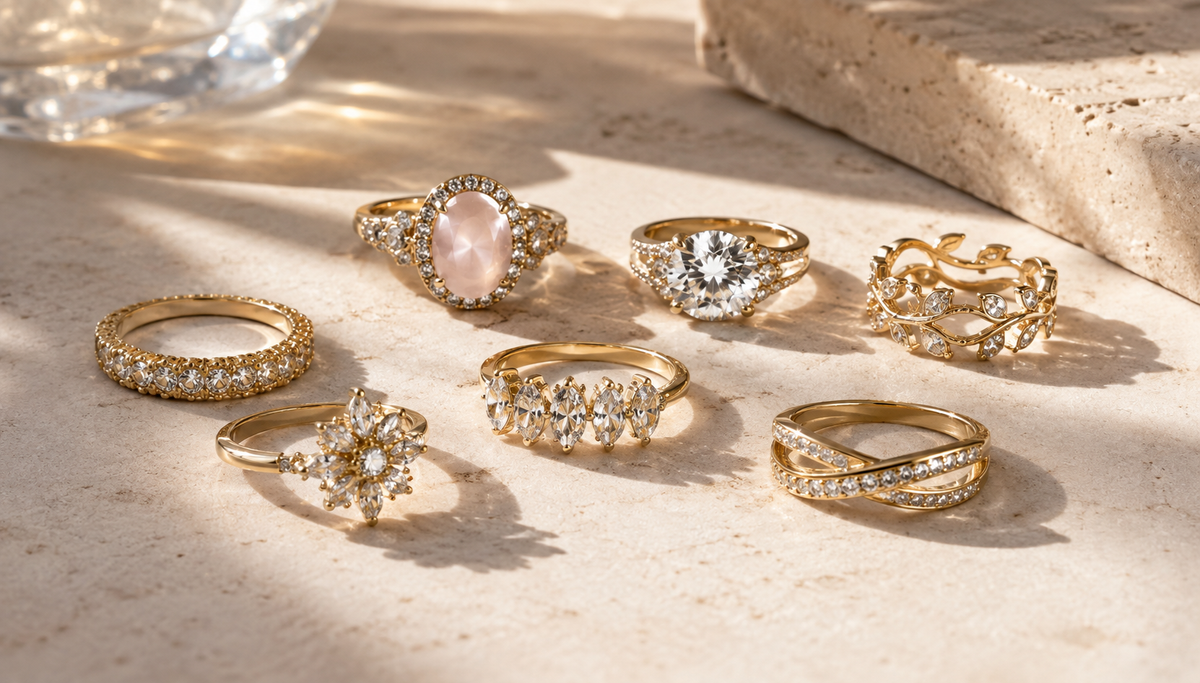
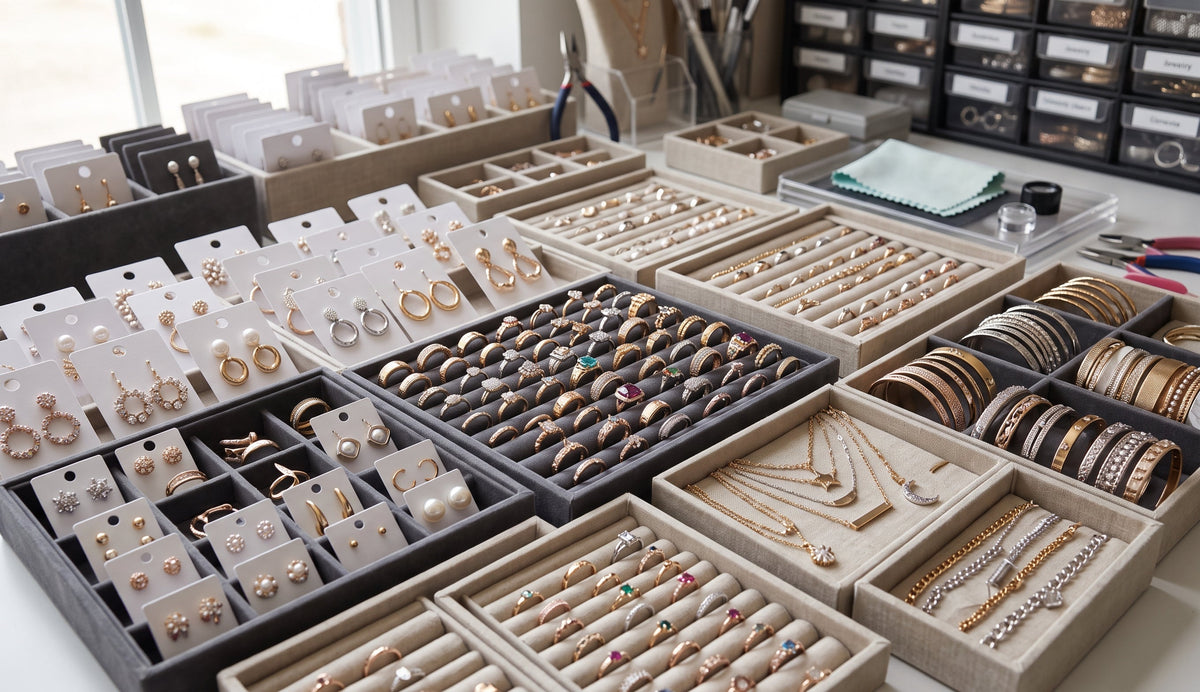
Wholesale jewelry sellers connect retailers with ready-to-sell pieces in quantities and price ranges designed for resale. Their catalogs may include fashion rings, earrings, necklaces, bracelets, pendants, and coordinated collections.
For a jewelry retailer, the supplier becomes part of the inventory strategy. A dependable wholesaler can help a store refresh its assortment, test new styles, maintain popular products, and respond to seasonal demand without requiring the retailer to manufacture every piece.
The best supplier also makes product information easy to understand. This matters because retailers need accurate details for their own product pages, social media posts, packaging, and customer service.
The Federal Trade Commission's Jewelry Guides emphasize truthful descriptions of jewelry's type, quality, metallic content, size, weight, treatment, durability, and other material characteristics. That makes supplier transparency more than a convenience. It gives retailers better information when creating their own listings.
What Should Retailers Compare in a Supplier?
The strongest comparison looks at the entire relationship, from the first sample order to repeat purchasing. Price matters, but it should sit alongside quality, reliability, product information, and resale potential.
#1 Product Quality Should Come Before Price
How can a retailer judge quality before committing to a large order? The practical answer is simple: order samples.
A sample allows a buyer to inspect details that product photos cannot fully show. Look at the finish under natural light. Check how securely stones sit in their settings. Examine ring edges, clasps, posts, backs, solder points, and plating. For fashion rings, check whether sizes feel consistent across different styles.
Retailers should also compare the physical product with the supplier's description. If a listing says a piece uses a particular metal, plating, crystal, or stone, the delivered item should match that description.
This becomes especially important when retailers sell to U.S. consumers. The FTC advises jewelry marketers to make accurate claims and disclose material information that could affect a buyer's understanding of a product.
#2 Compare the Landed Cost, Not Just the Unit Price
A $3 ring is not automatically cheaper than a $3.50 ring. Why? The real cost may include shipping, packaging, minimum-order requirements, payment fees, and other ordering expenses.
Retailers should calculate the landed cost per piece before comparing suppliers. For example, a supplier offering a lower unit price may require a much larger minimum order. Another supplier may charge slightly more per piece but allow smaller orders and offer more predictable shipping.
This distinction matters for smaller jewelry stores and online sellers that want to test styles before committing to large quantities.
#3 Check the Minimum Order Quantity
Minimum order quantity, commonly called MOQ, deserves close attention. A supplier might offer an attractive wholesale price but require 24, 50, or 100 units per style. That can work well for a retailer with strong sales data. It can be less practical for a business testing an unfamiliar trend.
A useful question is: Can the retailer buy enough inventory to receive a good price without tying up too much cash in one style?
Flexible ordering can give retailers more room to test new designs, identify best sellers, and reorder with greater confidence.
#4 Look at Design Depth, Not Just Catalog Size
A catalog containing thousands of products can look impressive. But does it contain the styles a retailer's customers actually want? A better comparison looks at design depth.
For example, a supplier may offer several variations of fashion rings across different finishes, stone colors, silhouettes, and sizes. That gives a retailer more ways to build a cohesive collection instead of filling the store with unrelated pieces.
Retailers should also examine how frequently suppliers introduce new designs. A steady flow of new products can help stores refresh their assortment without completely changing their buying strategy.
#5 Ask How Consistent the Quality Is
One sample can look excellent. The bigger question is whether the next 50 pieces will look the same. Consistency is one of the less-discussed factors in wholesale buying.
Retailers should pay attention to whether plating color, stone appearance, sizing, finish, and construction remain consistent from order to order. They can also keep a sample from an initial purchase and compare it against later shipments. This creates a simple quality-control reference.
For an online retailer, consistency also reduces the chance that a product photograph represents one version of an item while the customer receives a noticeably different version.
#6 Review Material and Product Claims Carefully
What exactly does "gold tone" mean? What does "gold plated" mean? Is a stone a natural gemstone, imitation stone, crystal, or another material? Retailers should never guess.
Suppliers should provide clear terminology and specifications that allow retailers to describe products accurately. The FTC notes that terms used for precious metals and jewelry materials have specific meanings, including distinctions among gold plating, gold-filled products, vermeil, and sterling silver.
For example, the FTC explains that sterling silver refers to products containing 92.5% pure silver, commonly represented by a 925 marking. For retailers, accurate supplier information makes product descriptions much easier to create and review.
#7 Check Product Availability and Restocking
A retailer may find a fast-selling ring and discover that the supplier cannot restock it consistently, creating a merchandising problem.
Before committing to a supplier, buyers should ask:
-
How often are popular products restocked?
-
Can retailers see current inventory?
-
Are discontinued styles clearly identified?
-
Does the supplier offer similar replacements?
-
How quickly can new collections become available?
Inventory reliability can matter just as much as the original wholesale price. A retailer needs to know what can realistically be reordered after a product starts selling.
#8 Examine Shipping and Packaging
Shipping is part of the supplier experience. Retailers should compare processing times, shipping methods, tracking availability, packaging quality, and how products are protected during transit. Small jewelry pieces need appropriate organization and protection so they arrive ready for inspection and inventorying.
A supplier that communicates clearly about order status also makes purchasing easier. Retailers can plan promotions around realistic inventory arrival dates instead of guessing.
#9 Study the Return and Defect Policy
What happens when a shipment contains a damaged piece? The answer should be clear before the order is placed.
Retailers should review how the supplier handles defective merchandise, incorrect items, missing pieces, and shipping damage. They should also check reporting deadlines and the documentation required for a claim.
A straightforward policy gives the buyer a clear process and helps prevent confusion between both businesses.
#10 Consider How Easily the Jewelry Can Be Sold
This is one of the most important comparisons, yet it often gets overlooked. A supplier is selling inventory. The retailer is buying products that must eventually generate revenue. That means buyers should examine each piece through a customer's eyes.
Can the retailer explain why the design is appealing? Does it photograph well? Does it fit the store's current assortment? Can it work for multiple occasions? Does the wholesale cost leave enough room for a sensible retail price?
Wholesale fashion jewelry should support the retailer's merchandising strategy, rather than simply add more products to a catalog.

Wholesale Jewelry Supplier Comparison Checklist
After comparing each factor individually, it becomes easier to see how suppliers stack up side by side. The table below summarizes the most important criteria jewelry retailers should review before placing an order, making it a practical checklist for evaluating both new and existing wholesale partners.
|
Supplier factor |
What retailers should check |
Why it matters |
|
Product quality |
Materials, finishes, stones, settings, clasps, plating |
Affects customer satisfaction and repeat sales |
|
Design selection |
Styles, colors, sizes, collections, new arrivals |
Helps keep the assortment fresh |
|
Pricing |
Wholesale price, quantity discounts, shipping costs |
Determines potential margins |
|
MOQ |
Minimum order per style or total order |
Affects inventory risk and cash flow |
|
Quality consistency |
Samples compared with later shipments |
Helps maintain customer expectations |
|
Product information |
Materials, dimensions, care, stone details |
Supports accurate product listings |
|
Availability |
Stock levels and restocking patterns |
Helps retailers plan replenishment |
|
Shipping |
Processing times, tracking, packaging |
Influences inventory planning |
|
Returns |
Defect policy, damaged goods, return terms |
Provides a clear solution when issues arise |
|
Customer support |
Response time and communication |
Makes ordering easier |
|
Product photography |
Clear, usable images |
Supports online merchandising |
|
Trend selection |
Current styles alongside reliable sellers |
Helps retailers respond to changing demand |
What Questions Should Jewelry Retailers Ask Suppliers?
How can a retailer test products before placing a larger order?
Ask about sample purchases or small initial orders. A sample gives the buyer an opportunity to evaluate construction, finish, sizing, packaging, and overall presentation before expanding inventory.
How can retailers compare two suppliers with similar prices?
Compare the complete landed cost, MOQ, product quality, restocking ability, shipping terms, defect policy, and communication. A small difference in unit price can become less important when the rest of the purchasing experience is considered.
What product details should a supplier provide?
At minimum, retailers should seek clear information about materials, dimensions, finishes, stone or crystal type, available sizes, care instructions, and relevant product specifications. This gives retailers a stronger foundation for accurate listings.
How often should a jewelry retailer reassess its suppliers?
A practical approach is to review suppliers after several purchasing cycles and again when the retailer's sales strategy changes. A supplier that worked well for a small test collection may have different strengths when the business begins ordering larger quantities.
Should retailers choose one wholesale jewelry supplier?
Many retailers benefit from having a primary supplier while maintaining relationships with additional sources. This approach can provide more flexibility when a particular style sells quickly, a collection changes, or a supplier's inventory shifts.
Final Thoughts
Comparing wholesale fashion jewelry suppliers requires more than lining up wholesale prices in a spreadsheet. Successful retailers examine the complete buying relationship: product quality, design selection, MOQ, landed cost, consistency, material information, inventory availability, shipping, customer service, and resale potential.
The strongest supplier is the one that fits the retailer's business model and helps the store maintain a reliable, appealing assortment.
For jewelry businesses, the goal is straightforward: buy products that customers want, price them sensibly, and build an inventory system that supports repeat sales. A careful supplier comparison can make each of those steps easier.
And when the supplier provides clear product information, consistent quality, dependable fulfillment, and a collection that gives retailers room to sell creatively, wholesale fashion jewelry becomes much more than inventory. It becomes a practical part of a well-planned retail strategy.