
Decoding Consumer Behavior to Help Boutique Owners Maximize Unplanned Sales
Retail businesses run on pure human emotion. Think about a regular Saturday afternoon in any popular local shop. Shoppers do not walk through the front door holding a strict, logical checklist. They rarely say they need to buy one massive sparkling band for their index finger today. Instead, they just wander around the space, looking at items on display. Their eyes scan the countertops, and suddenly, they see a bright flash of color.
In a split second, their mood changes. A few minutes later, they hand over their credit card for an item they did not even know existed when they parked their car. This spontaneous behavior accounts for a huge portion of total retail sales across the United States fashion accessories market.

If you are a new store owner trying to figure out how to increase your revenue, mastering these sudden buying habits is your fastest path to success. The trick is to fill your store with inventory that commands attention immediately. Stocking a smart mix of high-impact wholesale fashion rings can easily turn a quiet afternoon into a highly profitable sales day.
When you understand the psychological triggers that push people to make these fast purchases, you can arrange your store layout to capture cash effortlessly.
This guide explains the exact mental steps your customers take before making an impulse buy, helping you choose the right stock, build great displays, and watch your business thrive.
What Statement Fashion Rings Are
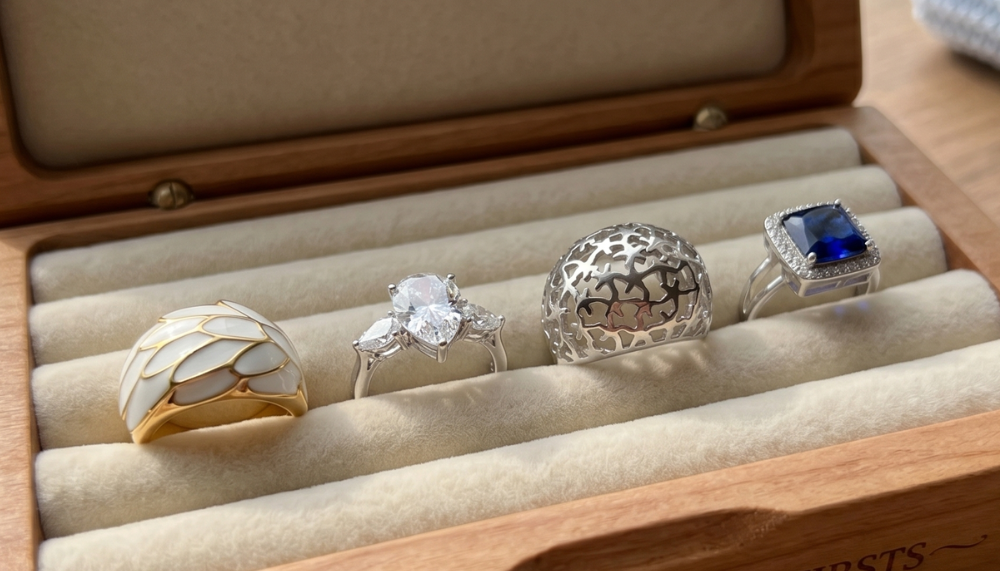
What defines a statement ring? Unlike thin metal bands or tiny minimalist hoops that disappear on the finger, these pieces exist for one reason, which is to get noticed. They are heavy, oversized, and incredibly bold. A statement ring serves as the main focus point for a person's entire outfit. It lets people show off their personality and creative style without saying a single word to anyone.
You will find these items decorated with heavy metal work, large colorful synthetic gemstones, unique textures, or strange geometric patterns that ignore traditional styling rules. They are fun, modern accessories designed for fast self-expression, making them highly popular in boutiques throughout the country.
Investing in a unique collection of wholesale fashion rings gives your boutique an instant advantage because you always have these eye-catching items waiting for customers who love a little extra drama in their wardrobe.
Here are the main features that make these specific items stand out on your shelves:
-
Oversized Profiles: These pieces take up a lot of physical space on the hand, using tall settings or wide metal bands to catch the light.
-
Bright Colors: They avoid boring tones in favor of deep, dramatic shades like emerald green, ruby red, or bright turquoise.
-
Unique Shapes: From retro vintage designs to sharp modern edges, the physical structures look like tiny pieces of art you wear on your fingers.
-
Luxury Style for Less: They give the wearer the heavy, expensive feel of high-end fine jewelry while keeping the wholesale cost low for small business owners.
-
Instant Outfit Fix: A shopper can wear a simple white t-shirt and casual blue jeans, but putting on a bold ring instantly makes them look put-together and fashionable.
The Psychology Behind Statement Rings and Impulse Jewelry Purchases
Learning why people spend money on a whim is like having a superpower in the retail world. Customers do not buy fashion accessories because they need them to stay alive or keep warm. They buy them because of how the jewelry makes them feel. An impulse purchase is a fast, feelings-based choice that happens when a customer sees a product and instantly feels like they have to own it. When you break down the daily mental habits of a standard retail shopper, you can set up your boutique perfectly to trigger these fast sales every day.
The Dopamine Rush of a New Discovery
Why do people buy items they had zero intention of looking for? It all comes down to basic brain chemistry. Shopping triggers a sudden release of dopamine, which is the natural chemical in the human brain that makes us feel happy, excited, and rewarded.
A major retail research study by PartnerCentric revealed that 81% of consumers in the United States made an impulse purchase last year. Surprisingly, 41% of shoppers admitted they buy non-essential items every single week, even when they are trying to stick to a tight household budget.
The surprise of finding a beautiful accessory creates a fast wave of joy. People naturally want to keep that happy feeling alive, so they finish the purchase to secure the reward. For store owners, this proves that your visual presentation matters more than almost anything else.
When you stock up on statement wholesale fashion rings that grab attention the second a customer walks by, you connect directly with this natural reward system. The piece of jewelry becomes an instant mood booster, changing a casual browser into a paying customer in a matter of seconds.
The Sizing Advantage in Accessory Retail
What is one of the biggest struggles in the fashion retail industry? It is the absolute nightmare of clothing sizes. Shoppers constantly get annoyed when trying on dresses, pants, or jackets because sizing rules change completely from one manufacturing brand to another. This bad experience can make people feel discouraged about their bodies, causing them to leave your store without buying anything. Jewelry completely gets rid of this stressful obstacle.
A ring is an incredibly easy, low-pressure product to buy. If a customer falls in love with a specific design, they can almost always find a finger that it fits, like a pointer finger, a thumb, or by picking an adjustable band style.
This apparel size frustration works to your benefit, making accessories the ultimate product for fast, spontaneous purchases. Trying on a new outfit requires a trip to the changing room, taking off shoes, and spending ten minutes under bad lighting. Trying on a ring takes about two seconds. The shopper slides it onto their finger, looks at it, and instantly visualizes walking out of the store with it. There is no body image anxiety or frustration.
Sourcing flexible, well-made wholesale fashion rings lets your boutique offer a wide variety of styles that fit every body type instantly, keeping the shopping mood fun, positive, and profitable.
Self-Expression and the Immediate Confidence Boost
How do people use their hands throughout the day? Human beings use their hands constantly to talk, tell stories, point at things, and greet their friends. Because our hands are always on display during the day, the items we wear on our fingers tell a big story about who we are.
When a shopper picks out a massive, dramatic ring, they are choosing exactly how they want to project themselves to the world that afternoon. It provides an instant wave of personal confidence.
A customer might feel tired or stressed out on a rainy Tuesday, but slipping on a fierce animal design or a giant glittering cocktail ring acts like a psychological shield. This action aligns with a concept psychologists call symbolic self-completion. This is where people use physical products to project a stronger, more confident version of themselves to the public.
Because rings are highly visible to the wearers themselves while they look at their phones or type on a keyboard, they offer a constant stream of reassurance. Store owners can train their staff to watch for this connection and offer quick, genuine compliments on how a piece matches a customer's personal energy, making the choice to buy even easier.
Social Media Urgency and Digital Trends
Where do modern shopping choices come from? They are heavily influenced by online video apps. Consumers spend hours every day scrolling through fashion styling tutorials, clothing hauls, and influencer lifestyle clips on platforms like TikTok and Instagram. Retail data from Fit Small Business shows that 52% of Gen Z shoppers look to TikTok to find and buy new products, while Millennials rely heavily on Instagram trends. When a customer sees their favorite digital creator wearing stacked, thick rings in a video, they want to recreate that exact look immediately.
This creates a massive mental push driven by the fear of missing out. When that same shopper walks into your brick-and-mortar boutique and spots similar styles on your shelves, their brain immediately links your product to the cool lifestyle they saw online. The urge to buy becomes very strong because internet fashion trends move incredibly fast.
Shoppers worry that if they do not buy the item right then and there, it will disappear forever. Placing trendy fashion rings on your counter displays or front-page website banners taps right into this internet-driven speed, helping you profit from viral trends before they get old.
Low Financial Risk and the Joy of Self-Gifting
How does a customer measure financial risk? A standard shopper almost never walks into a local store and buys a four-figure diamond necklace on a random whim. That type of major purchase requires months of saving, budget meetings, and deep thought. Fashion accessories work under a completely different set of financial rules. Because these pieces are priced affordably, they fit perfectly into the average US consumer's spending budget for wants, which sits around $2,000 per month.
A customer does not feel any financial guilt when spending twenty or thirty dollars on a beautiful ring that makes them smile. The internal debate shifts from a question of strict affordability to a simple desire to treat oneself after a long day. This mental shift gives boutique owners a massive commercial advantage. The low price point lowers a customer's natural defenses against spending, making the transaction feel like a harmless, well-deserved gift to themselves rather than a reckless financial choice.
When your shop offers a broad variety of these high-quality, budget-friendly pieces, customers frequently pick up two or three at once, boosting your average checkout totals without causing any buyer remorse later on.

Summary of Psychological Triggers and Retail Solutions
The table below provides a quick reference guide for boutique owners looking to match consumer motivations with practical storefront actions:
|
Psychological Trigger |
Consumer Motivation |
Retail Action Plan |
|
Dopamine Release |
Seeking an immediate mood boost and the thrill of discovery. |
Utilize bright, focused spotlighting on unique product displays. |
|
Zero Sizing Friction |
Desiring a hassle-free accessory that is guaranteed to fit. |
Offer adjustable bands and clearly group items by size ranges. |
|
Identity Projection |
Wanting to express confidence and personal style visually. |
Train sales associates to offer genuine styling compliments. |
|
Social Media FOMO |
Craving to stay relevant with fast-moving internet fashion trends. |
Feature popular online aesthetics on prominent signboards. |
|
Low Financial Risk |
Feeling comfortable making a purchase under a certain budget. |
Position affordable items near the checkout cash register. |
Frequently Asked Questions
Q: Why do statement rings drive more impulse sales than minimalist jewelry?
A: Statement items drive more spontaneous sales because they possess high visual impact. A minimalist silver band can easily blend into the background, requiring a customer to actively look for it. In contrast, a large cocktail ring with a vibrant centerpiece catches the eye from across the room, immediately triggering curiosity. The bold design creates an instant emotional reaction, which is the foundational spark required for an unplanned purchase.
Q: What price range is ideal for maximizing spontaneous jewelry buys?
A: For fashion accessories within the United States market, the sweet spot for spontaneous purchases typically sits between $15 and $40. This range is low enough to skip deep financial deliberation, yet high enough to assure the consumer that they are buying a durable, beautiful piece of jewelry. This balanced pricing structure keeps the barrier to purchase incredibly low.
Q: How often should a boutique update its jewelry inventory to keep shoppers engaged?
A: To keep the shopping experience fresh and exciting, store owners should introduce new arrivals every two to four weeks. Frequent updates encourage regular customers to visit often, knowing they will always find something new to discover. Regularly purchasing trendy styles ensures that a boutique always has fresh items that align with current pop culture developments and seasonal transformations.
Final Thoughts
Succeeding in the competitive jewelry marketplace requires a smart combination of trend awareness and consumer psychology insights. When a boutique aligns its visual inventory with the natural emotional drivers of impulse purchasing, sales goals become much easier to achieve consistently. Offer affordable, expressive options that speak directly to a customer's sense of identity to turn simple hand accessories into major drivers of long-term commercial success.