
Learn how to arrange your pieces to capture attention, trigger emotion, and boost sales with every customer visit.
Store owners constantly look for fresh ways to capture customer attention and drive immediate sales. Spontaneous buying remains a massive driver of retail revenue today. In fact, 81% of shoppers have made an unplanned purchase this year, with the median spend sitting right around $50.
This budget-friendly sweet spot aligns perfectly with stocking beautiful wholesale fashion jewelry. Thoughtful visual merchandising does the heavy lifting by speaking directly to a shopper's emotions and creating excitement. With strategic lighting and clever placement, retailers can easily transform casual window shoppers into enthusiastic buyers.

The Importance of Jewelry Displays for Physical Shops
Physical stores hold a distinct advantage over online shopping because they allow customers to see, touch, and experience products in person. An eye-catching display acts as a silent salesperson on the floor. It guides the customer's eyes, tells a compelling story, and creates a specific mood that encourages spending.
Shoppers form an impression of a retail environment within the first few seconds of walking through the doors. When they see a well-organized, brilliantly lit display of fashion jewelry, they instantly perceive the items as valuable and highly desirable.
Good visual merchandising reduces decision fatigue, highlights the best pieces, and subtly encourages shoppers to spend more time browsing. The longer they stay in the store, the more likely they are to make a spontaneous purchase.
Here is why optimizing a store's visual setup matters so much to overall success:
-
First Impressions: An inviting entrance setup catches passersby's eye and draws them inside, setting a positive tone for the entire visit.
-
Perceived Value: Excellent lighting and clean cases make even the most affordable pieces look expensive and highly desirable.
-
Guided Navigation: Clever layouts direct foot traffic naturally toward high-margin items and promotional pieces without feeling forced.
-
Emotional Connection: Beautiful arrangements evoke positive feelings, making shoppers more inclined to treat themselves to a spontaneous reward.
-
Brand Identity: Consistent and attractive visual themes communicate a store's personality, building trust and long-term loyalty with the community.
10 Jewelry Display Ideas That Encourage Impulse Purchases
Visual merchandising requires a thoughtful mix of consumer psychology, artistic design, and smart retail strategy. Retailers need to present items in a way that sparks joy and creates a mild sense of urgency.
The following concepts will help store owners maximize their floor space and boost their bottom line:
#1 Position Small Items Near the Checkout Register
The cash wrap is the absolute best zone for unplanned buys. While customers wait to pay, their eyes naturally wander. This idle time presents a fantastic chance to showcase inexpensive, trendy accessories.
Shop owners should place small, attractive items like simple rings or classic stud earrings right on the counter. Make sure these items are priced clearly and fall within the $15 to $30 range. Customers easily justify adding a small, affordable piece to their total purchase as a reward for themselves.
#2 Utilize the Power Wall
Retail psychology studies show that 90% of customers naturally turn to the right when they enter a store. The wall immediately to the right of the entrance is known in the industry as the Power Wall. Merchants should reserve this highly visible real estate for their most striking and profitable pieces.
Creating an eye-catching focal point here using bold colors, excellent lighting, and absolute best-selling items works wonders. When shoppers see something spectacular the moment they walk in, it sets a positive, buying-focused tone for the rest of their visit.
#3 Apply the Eye-Level is Buy-Level Rule
Products placed at eye level receive the most attention and generate the highest sales volume. Managers should position top-tier wholesale fashion jewelry directly in the customer's line of sight. Lower shelves require people to crouch, while high shelves force them to stretch uncomfortably.
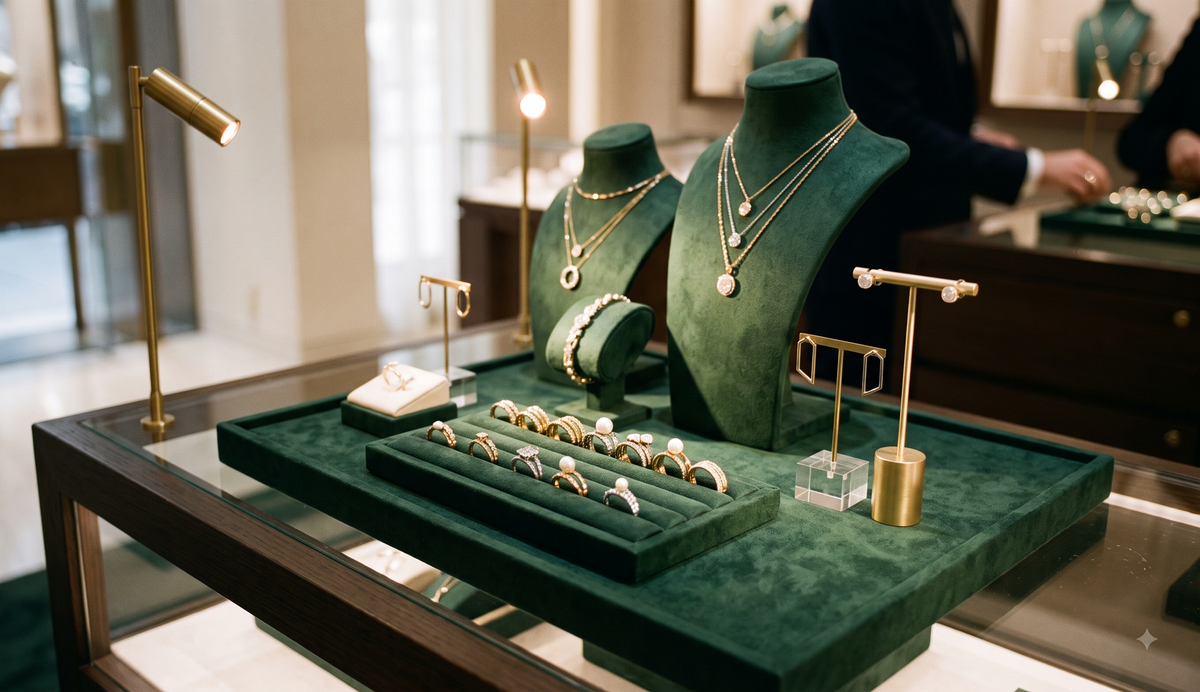
Keep the most tempting, impulse-friendly items right where shoppers naturally look. Velvet risers and customized acrylic stands help lift flat pieces off the table, giving them the visual prominence they deserve.
#4 Group Products by Theme or Color
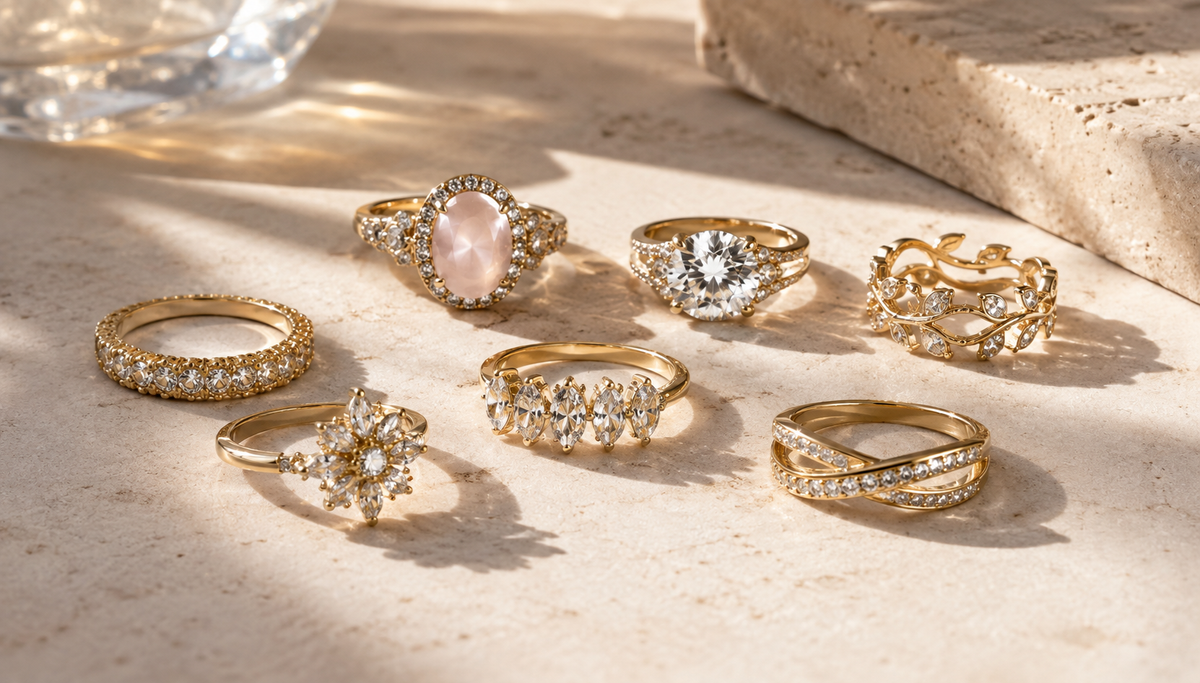
A chaotic presentation overwhelms the brain and drives customers away. Instead, retail teams should group accessories logically. Arranging pieces by color palette, seasonal themes, or specific aesthetics like bohemian chic or modern minimalist proves highly effective.
When a customer sees a matching necklace, bracelet, and earring set grouped together, they feel inspired to buy the entire collection. Color coordination is visually soothing and makes shopping feel effortless.
#5 Use Strategic Lighting to Add Sparkle
Lighting completely transforms how a customer perceives a shiny item. Poor lighting makes beautiful pieces look dull, while bright, focused lighting brings out the shine in every stone and metal. Retailers must use a mix of ambient lighting for the whole store and directed LED accent lights inside glass display cases.
When a piece catches the light and sparkles brilliantly, it immediately captures attention. That sudden flash of brilliance often triggers a strong emotional response that leads straight to a purchase.
#6 Incorporate Clear and Urgent Signage
Words have immense power in the retail environment. A simple, well-designed sign can convince a hesitant shopper to make a purchase right away. Store owners should use positive, action-oriented language like Treat Yourself, Fresh Arrivals, or Limited Edition.
Red signs with bold white text historically perform very well for sales and promotions because they stand out visually. Keep the text brief and easy to read. A clear price tag combined with a short, punchy phrase creates a sense of urgency without appearing desperate.
#7 Try Cross-Merchandising with Lifestyle Items
Cross-merchandising involves pairing accessories with other complementary products in the shop. If a boutique sells clothing, staff can drape a stunning statement necklace over a mannequin wearing a simple dress. If the store sells handbags, attaching a sparkly charm to the zipper works beautifully.
Showing the customer how to wear and style the wholesale fashion jewelry removes all the guesswork. It helps them visualize the item in their everyday life, which greatly increases their desire to buy it right then and there.
#8 Keep Displays Fully Stocked but Neat
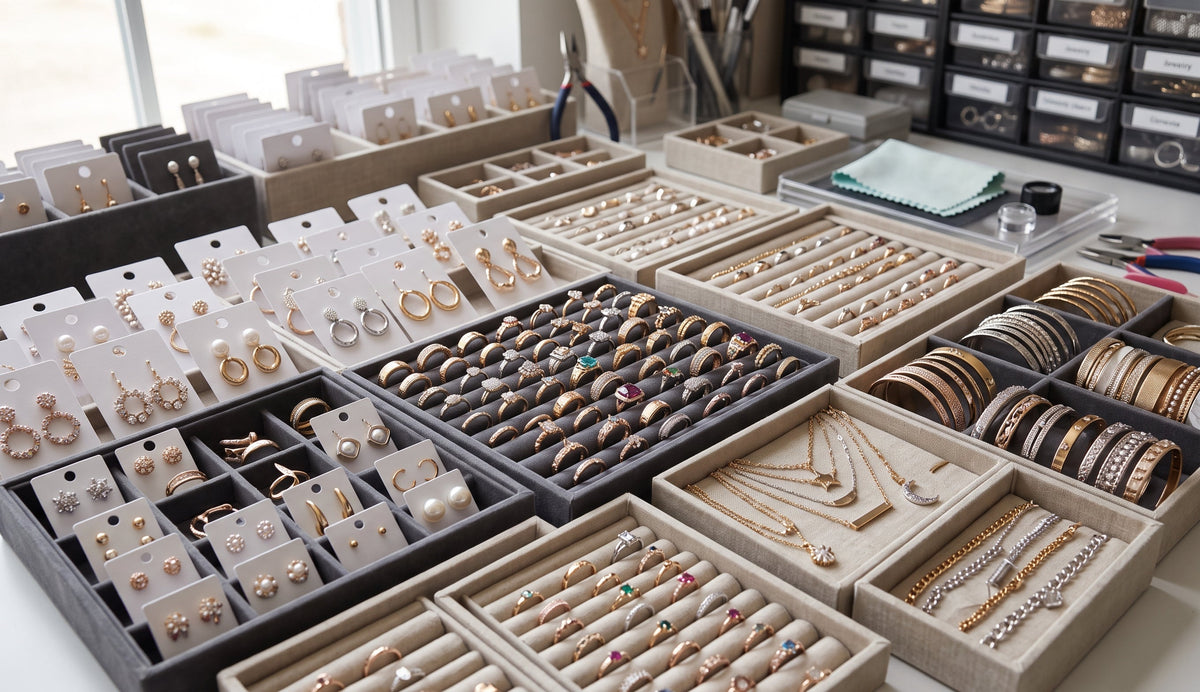
An empty shelf signals to customers that the best items are already gone. Display cases need to look abundant and full of exciting choices. However, staff must maintain a strict balance between abundant and messy. Keep a neat, orderly arrangement with enough empty space between pieces so each item can stand out.
High-quality trays with individual slots for rings and delicate chains work perfectly. A tidy, well-stocked presentation builds trust and makes the customer feel like they are shopping in a high-end boutique.
#9 Use Mirrors to Encourage Interaction
Customers need to see how a piece looks on them before they commit to buying. Placing small, beautifully framed hand mirrors near displays invites shoppers to pick up an item and hold it against their skin. The moment a customer sees themselves wearing a sparkling necklace or a pair of elegant earrings, their emotional connection to the piece skyrockets.
The physical act of trying something on breaks down hesitation and pushes them closer to a definite purchase. Store managers must ensure mirrors are always spotless.
#10 Offer Visual Bundle Promotions
Retailers can stimulate larger purchases by visually demonstrating the value of buying multiple items at once. Placing a small, elegant sign next to a matching set of bracelets that says Buy Two, Get the Third Half Off is highly effective. Arranging the bracelets in groups of three shows exactly what the deal looks like in person.
Shoppers who originally intended to buy just one piece will often upgrade to three because the perceived value is too good to pass up. This tactic clears out inventory faster while satisfying the buyer's desire for a great bargain.

Quick Reference: Impulse Display Strategies
|
Display Strategy |
Primary Goal |
Ideal Location |
Suggested Items |
|
Checkout Counter Trays |
Capture last-minute attention |
Next to the cash register |
Rings, stud earrings, simple chains |
|
The Power Wall |
Make a strong first impression |
Immediately to the right of the entrance |
Best-sellers, bold statement pieces |
|
Eye-Level Risers |
Maximize visibility and access |
Middle shelves, countertop centers |
High-margin pieces, matched sets |
|
Themed Groupings |
Encourage multiple item purchases |
Front window, central tables |
Seasonal collections, color-coordinated sets |
|
Lifestyle Pairings |
Show practical styling ideas |
On clothing mannequins, near accessories |
Long necklaces, brooches, charm bracelets |
|
Interactive Mirrors |
Drive personal connection |
On countertops near necklaces |
All wearable accessories |
Frequently Asked Questions
Q: What makes a customer buy jewelry on impulse?
A: Most spontaneous purchases are driven by sudden emotion and the desire for instant gratification. When a customer sees a beautiful item that makes them feel happy, confident, or excited, they want to capture that feeling immediately. Factors like an affordable price point, attractive lighting, and seamless product placement play massive roles in triggering this emotional response.
Q: How often should a store change its visual displays?
A: Retailers should refresh visual presentations every two to four weeks. Regular customers stop noticing items if they stay in the exact same spot for too long. By rotating inventory and introducing new themes, store owners create a constant sense of novelty. Shoppers love discovering fresh designs, which keeps them coming back to see what the shop has added recently.
Q: Does lighting really make a big difference in sales?
A: Yes, lighting changes everything in the retail environment. Studies show that customers perceive well-lit items to be significantly more valuable. Proper LED accent lighting brings out the shine, sparkle, and intricate details of the merchandise. When pieces look brilliant and expensive, shoppers are much more likely to buy them on the spot.
Q: What is the best price range for impulse buys?
A:Current retail statistics indicate that the sweet spot for rapid, unplanned purchases is between $15 and $50. At this price level, customers view the purchase as a low-risk treat rather than a major financial commitment. Stocking beautiful wholesale fashion jewelry allows merchants to offer high perceived value within this exact budget-friendly range.
Q: How can a retailer prevent their store from looking too cluttered?
A: The key to avoiding clutter is embracing negative space. You do not need to display every single piece of inventory at the same time. Keep extra stock in the back room or stored neatly under the counters. Give each piece of jewelry enough room to breathe on the display tray. When you limit the number of items on view, it actually increases the perceived value of each individual piece.
Final Thoughts
A retail space holds incredible potential for generating spontaneous sales every single day. Understanding human behavior and applying strategic design principles allows store owners to gently guide customers toward making unplanned purchases. Keeping checkout areas stocked with tempting small items, using the right side of the store effectively, and always keeping merchandise perfectly lit make a big difference.
Visual merchandising requires consistent effort, but the resulting boost in daily revenue makes it well worth it. Managers can start small by rearranging a single showcase today. Paying attention to how customers react, tracking what sells, and continually refining the approach lead to long-term success. Creating an inviting, beautifully organized store ensures that every person who walks through the doors leaves with a newly purchased piece and a smile.