
A Complete Guide to Keeping Retail Customers Happy and Boosting Profits
Building a retail jewelry brand requires excellent inventory management and top-tier customer service. Retailers often face challenges when managing size variations and processing exchanges. Buying inventory like wholesale fashion rings helps storefronts stay stocked with trendy designs, but managing how those items fit the end consumer takes careful planning.
When a customer orders a ring that does not fit, the business must process the exchange smoothly to keep that customer loyal. This guide breaks down how store owners can simplify the sizing system and manage product returns effectively.

The Sourcing Struggle: Finding the Right Ring Sizes
New jewelry business owners often face a major hurdle when deciding which ring sizes to stock. Unlike clothing, where small, medium, and large can cover a wide range of body types, rings require exact measurements. A fraction of a millimeter can mean the difference between a perfect fit and a piece of jewelry that slips off or pinches the finger.
When starting out, store owners might feel tempted to buy an equal number of every size available from their wholesale fashion jewelry supplier. However, this strategy often leads toexcess inventory sitting on shelves for months.
Statistics from the National Retail Federation indicate that inventory distortion, including overstocks and stockouts, costs retailers significant revenue each year. In the United States jewelry market, consumer demand centers around specific average sizes. For women, the most common ring sizes are 6, 7, and 8, with size 7 being the absolute standard for most hands. For men, the average sizes generally range from 9 to 11.
When a boutique orders a fresh batch of wholesale fashion rings without analyzing these consumer trends, they often run out of sizes 6 and 7 within the first week. Meanwhile, they are left with an overabundance of size 5 and size 10 rings that take much longer to sell. This imbalance ties up valuable capital that the business could use to purchase new inventory.
To overcome this sourcing struggle, store owners need to study their target audience and buy inventory in a bell-curve ratio. This means investing heavily in core sizes while purchasing fewer items in the extreme small or large sizes. Understanding regional demographics also helps, as average finger sizes can vary slightly depending on the lifestyle and climate of your customer base.
The Return Hurdle: Managing Exchanges and Customer Expectations
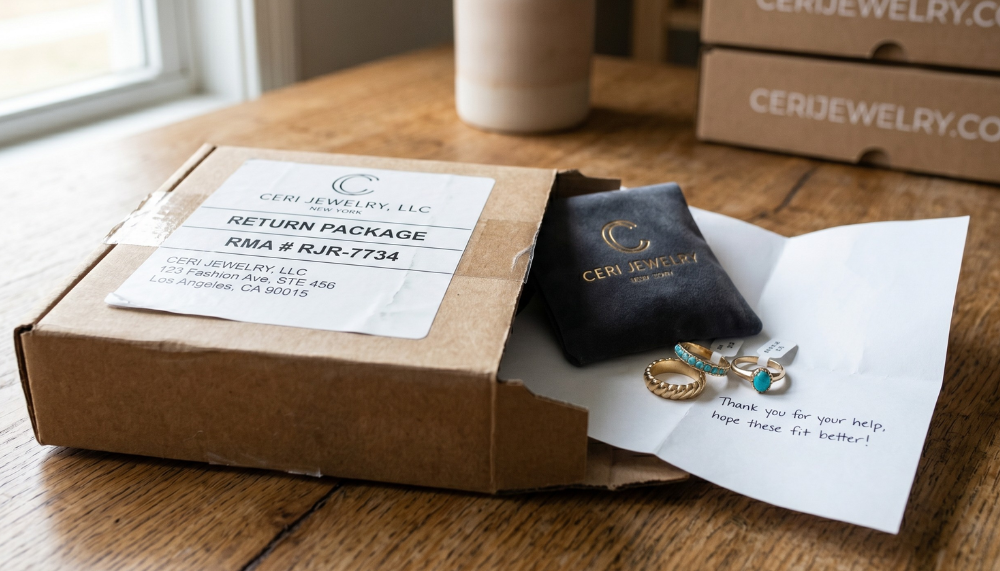
Handling customer returns is one of the most stressful parts of running a retail business, especially for newcomers. When a customer receives a ring in the mail and discovers it is too small, their initial excitement turns into disappointment. The way a business handles this moment determines whether that customer will ever buy from the shop again.
Online jewelry retailers experience higher return rates than physical storefronts because digital shoppers cannot try items on before purchasing. According to industry reports, online return rates across retail sectors can range from 15% to 20%, and jewelry often sits at the higher end of that spectrum due to sizing errors.
Processing returns involves hidden expenses that can quickly drain a startup's profit margins. Every return requires return shipping fees, labor for inspecting the item, and repackaging costs. If a customer returns a piece because of a sizing mix-up, the owner must check the ring for scratches, clean it, and place it back into the inventory system logs.
If the item arrives damaged or shows signs of wear, the business must decide to write it off as a loss or risk upset feelings by denying the return. Many new business owners struggle to balance being generous to customers with protecting their financial bottom line. Establishing a structured system for inspecting returned items ensures fairness and keeps the inventory clean.
5 Actionable Strategies to Handle Ring Sizing and Returns Successfully
Jewelry store owners can implement several proactive strategies to minimize sizing mistakes and streamline the return process. Educate customers and optimize the checkout experience to prevent issues before they occur.
#1 Implement a Digital Sizing Academy on Your Website
How can you help a shopper discover their correct ring size from the comfort of their home? You can build an educational page on your website dedicated to sizing education. Provide adownloadable, printable paper ring sizer that customers can cut out and wrap around their fingers. Ensure you include a calibration check, such as a line matching the size of a standard credit card, so customers know their printer did not shrink the image.
#2 Provide Visual Sizing Comparisons
Many shoppers do not know their ring size in numbers, but they do know how their fingers compare to common objects. Create a chart that links ring sizes to inner diameter measurements in millimeters alongside familiar references. Explain how temperature and time of day affect finger size. Remind customers that fingers swell in the evening and during warm weather, so measuring fingers at the end of the day yields the most accurate results.
#3 Incentivize Size Exchanges Over Cash Refunds
When a customer initiates a return due to an incorrect fit, encourage them to swap the item for the correct size rather than requesting a full refund. Offer a small bonus, such as a discount code for their next purchase or a free jewelry polishing cloth, if they choose a size exchange. This keeps the revenue within your business and ensures the customer still gets a beautiful piece of jewelry to wear.
#4 Bundle Common Sizes for Easy Purchasing
When ordering wholesale fashion rings from your jewelry supplier, look for pre-packaged size bundles that match consumer buying habits. Experienced suppliers often sell ring assortments that feature a smart mix of popular sizes. This saves you time during the ordering process and ensures you always have the right items in stock for your customers.
#5 Clear Up Your Return Window Policies
Create a simple, positive return policy that outlines exactly how many days a customer has to exchange an item. A standard 30-day window gives shoppers plenty of time to try on their items while ensuring the business receives returns quickly enough to resell them within the same fashion season. Keep the policy wording friendly and straightforward so that shoppers feel secure when checking out.

Ring Sizing and Return Solutions at a Glance
The following table provides an overview of common sizing and return challenges along with effective solutions that jewelry retailers can implement today:
|
Business Challenge |
Root Cause |
Practical Solution |
Business Benefit |
|
High return rate on rings |
Customers guessing sizes |
Add a downloadable size guide |
Reduces return rates by up to 30% |
|
Excess inventory of rare sizes |
Buying equal size ratios |
Follow a bell-curve purchasing model |
Frees up cash flow for new stock |
|
Shipping costs eating profits |
Free return shipping policies |
Offer exchanges with free shipping, charge for refunds |
Retains business revenue |
|
Slow return processing times |
No structured inspection rule |
Create a three-step return checklist |
Speeds up item restocking times |
|
Customer cart abandonment |
Fear of wrong fitment |
Highlight easy exchanges at checkout |
Increases overall website conversions |
Frequently Asked Questions
Q: What are the most common ring sizes I should stock for a US audience?
A: For women, the core sizes that sell the fastest are sizes 6, 7, and 8. Size 7 is widely considered the average female ring size in the United States. For men, the most common sizes requested are 9, 10, and 11. When sourcing wholesale fashion rings for your shop, allocate roughly 70% of your budget to these central sizes and use the remaining 30% for smaller and larger options.
Q: How can a business calculate the cost of a product return?
A: To find the true cost of a return, add up the price of the return shipping label, the cost of the packaging materials, the labor time spent inspecting and cleaning the item, and any loss in value if the product cannot be resold. Tracking these numbers helps you realize why preventing returns through accurate size charts is so important for long-term profitability.
Q: Is it better to offer free returns or charge a return shipping fee?
A: Offering free exchanges is an excellent way to build trust with your customer base and increase conversion rates. However, to protect your profit margins, you can require customers to pay a small return fee if they want a full cash refund instead of a store credit or size exchange. This policy encourages shoppers to choose an exchange, keeping the money in your store.
Q: How do temperature variations affect a customer's ring size?
A: Human fingers react to weather changes. Cold temperatures cause blood vessels to constrict, making fingers shrink slightly. Warm weather and physical activity cause fingers to swell. Advise your customers to measure their fingers at room temperature during the afternoon, as this provides the most stable and comfortable everyday measurement.
Q: What should I do with rings that are returned with slight scratches?
A: If an item comes back with minor signs of wear, you can use a jewelry polishing cloth to restore its shine. If the scratches are deep and the item cannot be sold as brand new, consider placing it in a discounted sample sale section on your website or offering it as a free gift to loyal customers who spend over a certain dollar amount.
Final Thoughts
Managing ring sizes and returns does not have to slow down your business growth. Understand customer size demographics and use a bell-curve model when sourcing wholesale fashion rings to keep your shelves filled with the items your customers actually need. Provide clear, printable sizing tools on your website to empower shoppers to buy with confidence and naturally cut down on return requests.
When returns do happen, handling them with an organized exchange program protects your store's revenue and turns a potentially disappointing moment into an excellent customer service victory. Stay positive, keep your policies clear, and watch your jewelry boutique thrive.